A Brief History of Milacron since 1884
 |
At the time of its incorporation on March 19, 1884, the Cincinnati Screw and Tap Co. and its dozen or so workers occupied the third floor of the building at the left. It was located at the southeast corner of Pearl and Plum Streets, a few blocks from the Ohio River. Two years later, the company moved to the second floor of the adjacent building at Second and Plum. |
The present-day Milacron grew out of a small, 19th-century machine shop in downtown Cincinnati. In 1878, the shop needed a new milling machine to make its screws, tap and dies, but money was tight, so business partner Fred Holz built one himself.
Even as the shop incorporated in 1884 as the Cincinnati Screw and Tap Company, Holz’s innovative milling machine design was drawing interest from other companies. A young business acquaintance, Frederick A. Geier, saw the possibilities and decided to invest his capital and exceptional sales skills in the business in 1887.
With Holz and Geier at the helm, the company switched its focus to machine-making, and in 1889 it became The Cincinnati Milling Machine Company.
| The milling machine, with innovative overarm support, designed by Holz and built by Cincinnati Screw and Tap in 1884. A milling machine is a versatile machine tool which uses a rotary cutter to change the size and shape of a metal workpiece. |
 |
While the flow of improved products was unending, for 30 years The Mill's mainstays were milling machines and cutter grinders, which had been introduced in 1890. In 1900, one of its milling machines won a gold medal in the Paris Exhibition. (It was one of two Cincinnati companies thus honored; Baldwin's grand piano also won.)
Over the next several decades, the duo catapulted a shop of a dozen employees into the world’s largest machine tool company. In the 1920s, the Mill, as the company was known, added a new product line: precision grinding machines for the growing automotive industry.
In the years just prior to Pearl Harbor, President Frederick V. Geier (son of Frederick A. Geier) doubled floor space in the plant, creating room for a sevenfold increase in production during World War II. The company built 17,511 machine tools in 1941, 7.8% of the nation’s total machine tool production.
 |
The most successful and prominent brand name in Milacron's industrial products business for several decades after World War II was Cimcool. Starting out as a line of water-based coolants for metalcutting and grinding, today the Cimcool line also includes oil and oil-soluble blends and thousands of formulas for all kinds of metalworking applications. |
The Mill introduced a variety of new products in the postwar years. One of the first was a water-based fluid to cool and clean both the cutting tool and work piece during metal-cutting — the forerunner of Milacron’s current-day Industrial Fluids division.
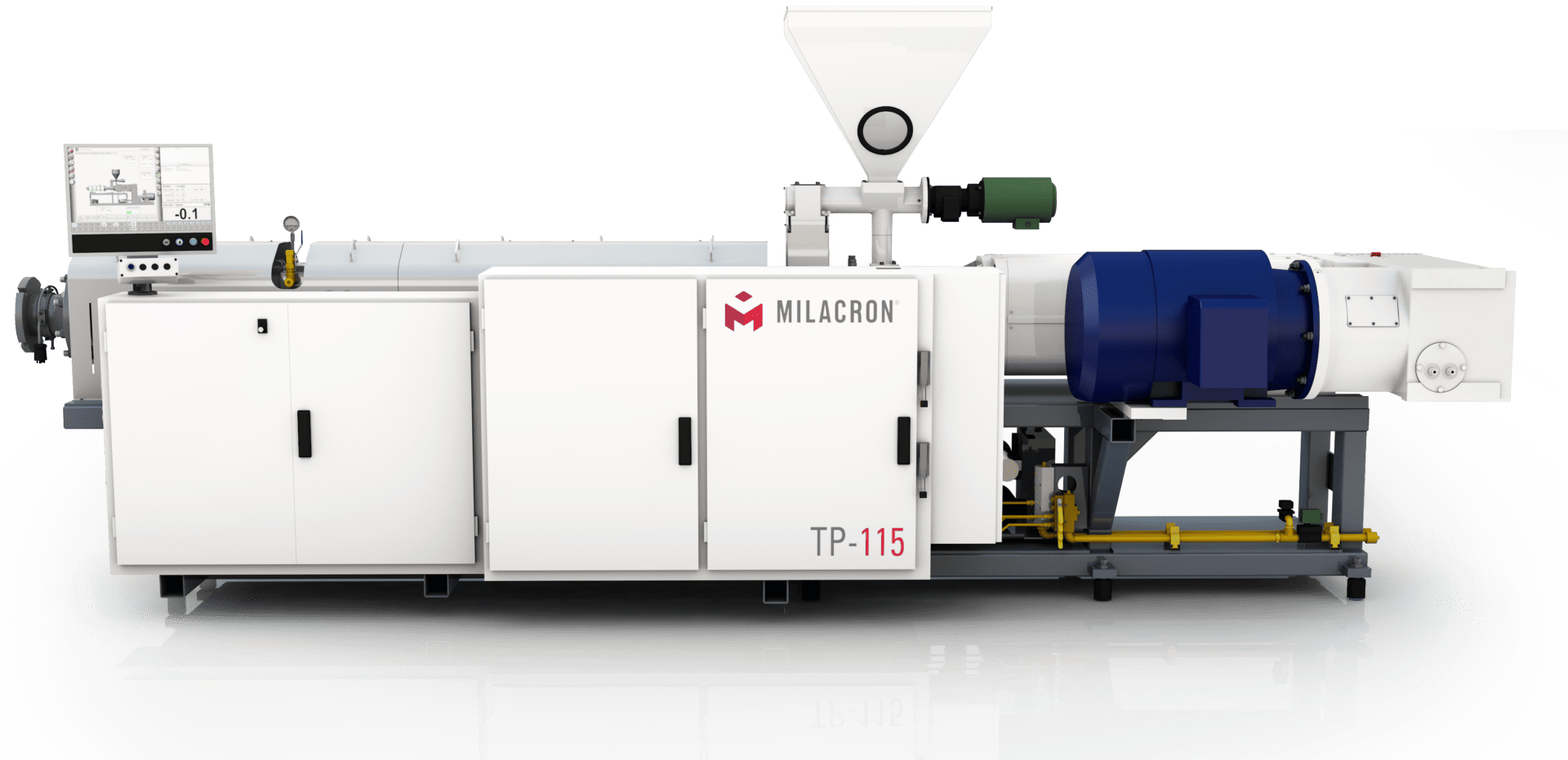
The company also began developing machines that made plastic products, capitalizing on the increasing popularity of plastic. The first injection molding machine debuted in 1968. During the 1970s and 1980s, Cincinnati Milacron, as the company was renamed, continued to expand its plastics-processing lines, becoming an industry leader in building injection molding, blow molding and extrusion machinery.
 |
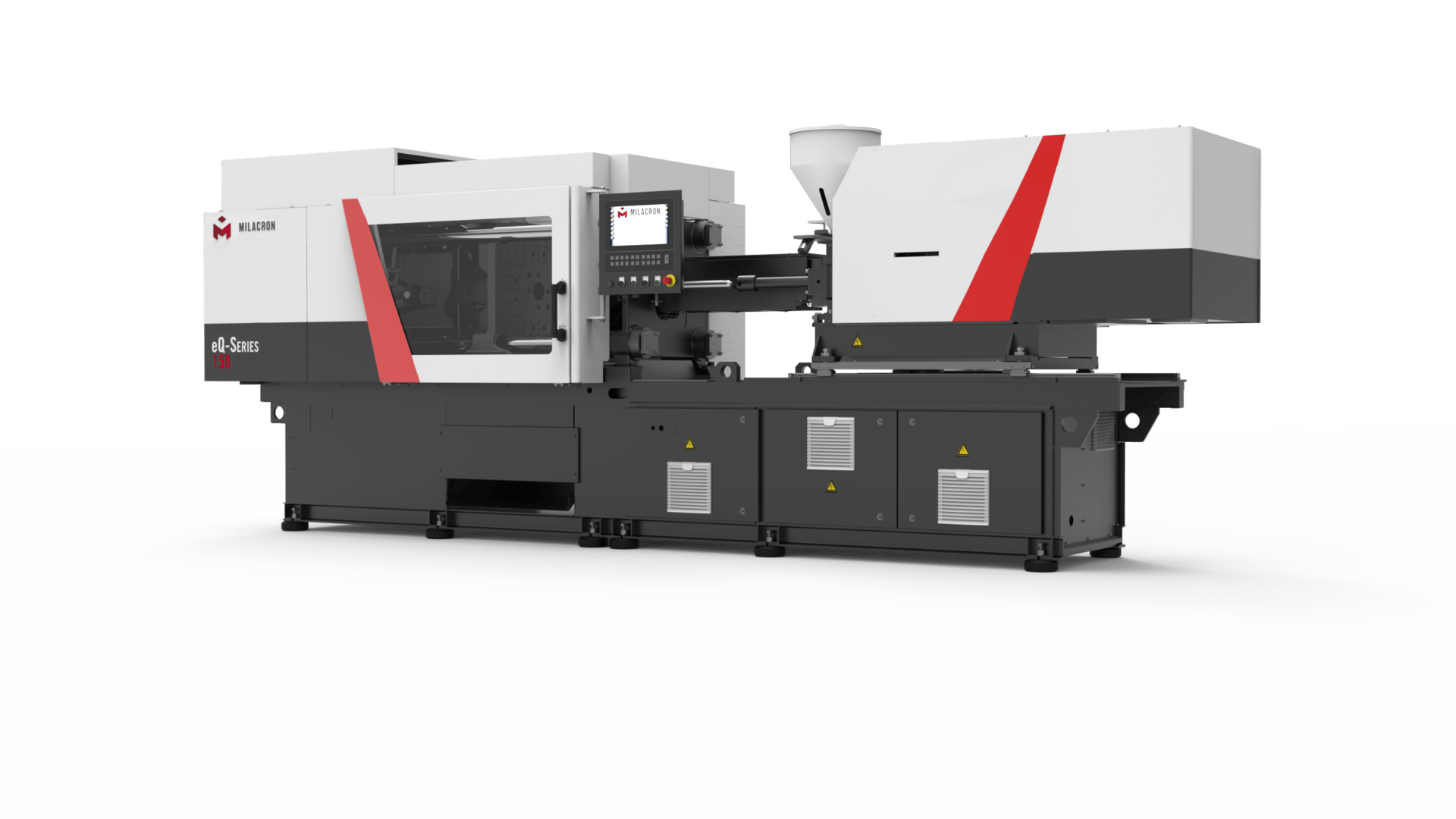
| Milacron's broad lines of general-purpose injection molding machines rank number one in North America and help make the company the second-largest supplier of machines and components to process plastic in the world. |
After World War I, the machine tool business went into a slump. By 1926 it had rebounded and the Mill had expanded its product line to include precision grinding machines. These were becoming increasingly important to the automotive industry and soon The Mill became the nation's leading machine tool producer overall.
By the 1990s, Milacron was the world’s broadest-range supplier to the plastics processing industry, not only building machinery but also offering mold tooling, replacement parts, supplies, services and support. It acquired several companies to strengthen this line of business, including Ferromatik (1993), D-M-E (1996) and Uniloy (1998).
As its focus on plastics machinery grew, the company shortened its name to Milacron Inc. In 2004, it completed its divestiture in the machine-tool business. Today Milacron is focused on being the world leader in plastics machinery, mold technologies and industrial fluids.
|
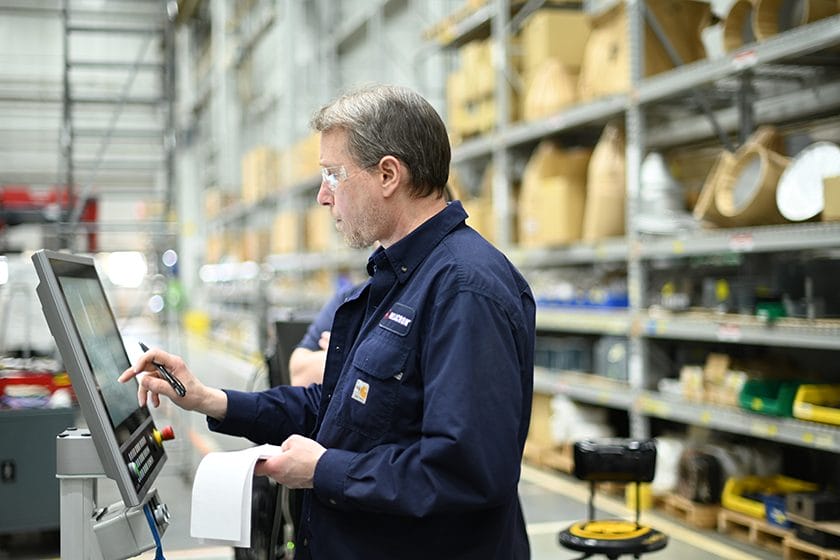
Today, Milacron's plastics technologies extend beyond machines and
systems to include mold bases, moldmaking tools, components and other aftermarket parts
and services. Shown here, two D-M-E assemblers put together a special mold base
system for a customer. |
|