

Blog
Milacron Stockholders Adopt Merger Agreement with Hillenbrand, Inc.
November 20, 2019
CINCINNATI – November 20, 2019 – Milacron Holdings Corp. (NYSE: MCRN) announced today that its stockholders voted to adopt…
Blog
August 28, 2026
Executive Summary
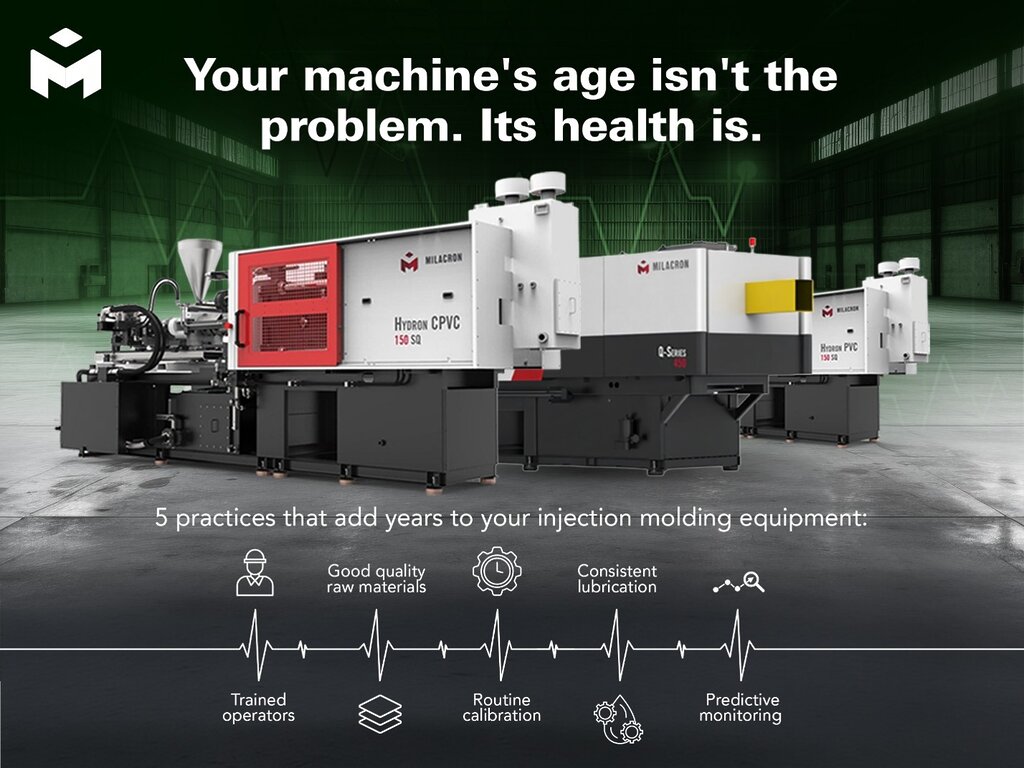
Machine age is a poor proxy for machine health. Two identical systems, installed the same year, can diverge sharply in output, quality, and downtime — and the difference almost always traces back to how well each machine has been operated, maintained, and monitored. For manufacturing leaders under pressure to protect margins and capacity, machine longevity is more than just a maintenance-department concern; it’s a capital efficiency strategy. This article outlines the operational and technology levers that extend injection molding machine life, reduce unplanned downtime, and turn preventive maintenance from a cost center into a competitive advantage.
When evaluating the health of an injection molding machine, age tells only part of the story.
Walk through any shop floor of a plastics processor, and you’ll find machines that defy their birth certificates. One ten-year-old system runs like new, hitting cycle targets and quality specs with minimal intervention. Another, installed the same year from the same line, requires constant troubleshooting and incurs unplanned downtime. The gap between these two machines is rarely age — it’s how each one has been run, maintained, and monitored.
This distinction matters more than ever. As processors face tighter margins, labor constraints, and rising capital equipment costs, the ability to extend the productive life of existing assets is a direct lever on ROI.
Extending machine life is ultimately about preserving machine health; not just running equipment longer, but running it well for longer. When critical systems are properly maintained and monitored, a machine is positioned to deliver consistent performance and reliable output over decades.
This article examines the factors that drive longevity in injection molding equipment and the practices that support long-term performance.
Modern injection molding machines are engineered for durability, but continuous operation places constant stress on every subsystem. If left unmanaged, small deviations compound into major failures.
Reduces the Risk of Unplanned Downtime: Unplanned downtime is costly — halting production, disrupting delivery commitments, and consuming labor hours on reactive repairs rather than planned service. Routine, structured maintenance helps highlight small issues before they escalate.
Supports Consistent Part Quality: Machine condition and process stability go hand in hand. A machine operating outside its intended parameters introduces variability that shows up as quality escapes. Machine health is quality control’s first line of defense, well before a part ever reaches inspection.
Minimizes the Compounding Cost of Component Wear: Wear is not linear. It accelerates stress on adjacent systems. Early detection interrupts this compounding effect before it multiplies the scope and cost of repairs.
Extends Equipment Lifespan: Proactively maintained machines remain reliable far longer than reactively managed ones. In an environment where new equipment lead times and costs are rising, maximizing the productive life of existing assets is now a strategic capacity decision.
Maintenance, viewed this way, is an investment in resilience — helping processors protect output, reduce disruption, and extend the return on capital.
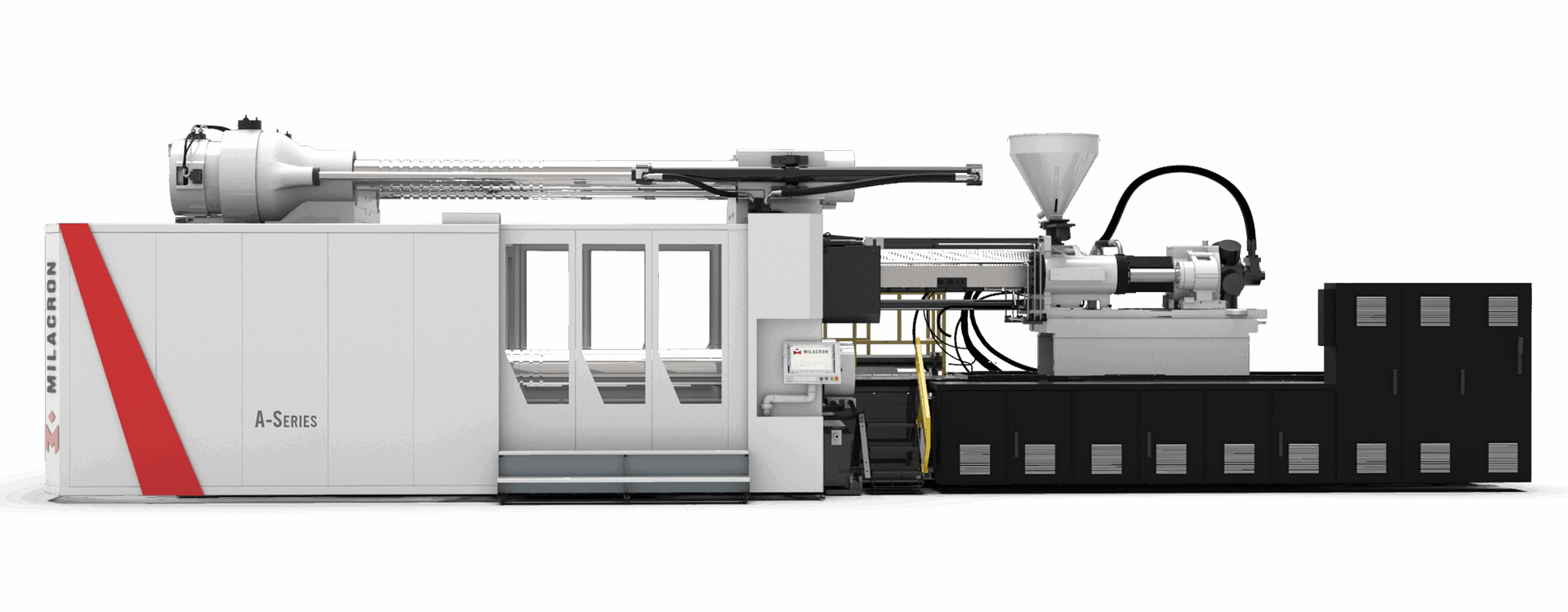
Lifespan varies significantly based on machine design, operating conditions, maintenance discipline, and production demands. In well-run environments, an injection molding machine can remain productive for 15 to 20 years or more.
But operational lifespan and productive lifespan are two different things. A machine can technically run for decades while its ability to consistently hit production targets and quality specs erodes far earlier, until yield or output data reveals the trend.
The processors who get the most value from their fleet often manage by machine health, using maintenance history, component condition, and performance trend data as the real indicators of remaining useful life.
Operating Hours and Utilization
Total operating hours are a better predictor of component wear. High-volume, round-the-clock production naturally accelerates stress on mechanical, hydraulic, and electrical systems compared to intermittent use. Utilization-adjusted maintenance scheduling, rather than fixed calendar intervals, is increasingly the more efficient approach.
Operator Practices
Even the most advanced machine can wear prematurely under inconsistent operation. Skilled, well-trained operators are key to machine longevity.
Raw Material Quality
Improperly prepared raw material increases wear on processing components and can destabilize production conditions. Material handling discipline is as much a machine health issue as a quality issue.
Production Conditions
Demanding process conditions sustained over long periods accelerate wear. Dust, moisture, heat, and inconsistent housekeeping all degrade sensitive components and increase the frequency of servicing.
To identify early signs of wear, process instability, or impending maintenance issues, it is crucial to monitor certain machine parameters. Certain indicators can provide valuable insights into overall machine health.
Hydraulic Pressure
Unusual fluctuations in hydraulic pressure may indicate leaks, worn components, or system inefficiencies that require attention.
Oil Temperature
Hydraulic oil operating outside the recommended temperature range can impair machine performance and accelerate component wear.
Cycle Time Consistency
Unexpected changes in cycle time can be an early sign of machine-, process-, or material-related issues. Tracking cycle consistency helps processors identify performance deviations that may impact productivity and part quality.
Injection and Holding Pressure
Variations in injection and holding pressure can affect part dimensions, surface quality, and process stability. Monitoring pressure trends helps ensure the machine continues to operate within intended process parameters.
Machine Alarms and Error Logs
Machine alarms often provide early warnings of developing issues. Reviewing alarm history and recurring faults can help maintenance teams identify patterns and address root causes before they result in production disruptions.
Regular monitoring of these parameters provides valuable insights into machine health and enables a more proactive approach to maintenance.
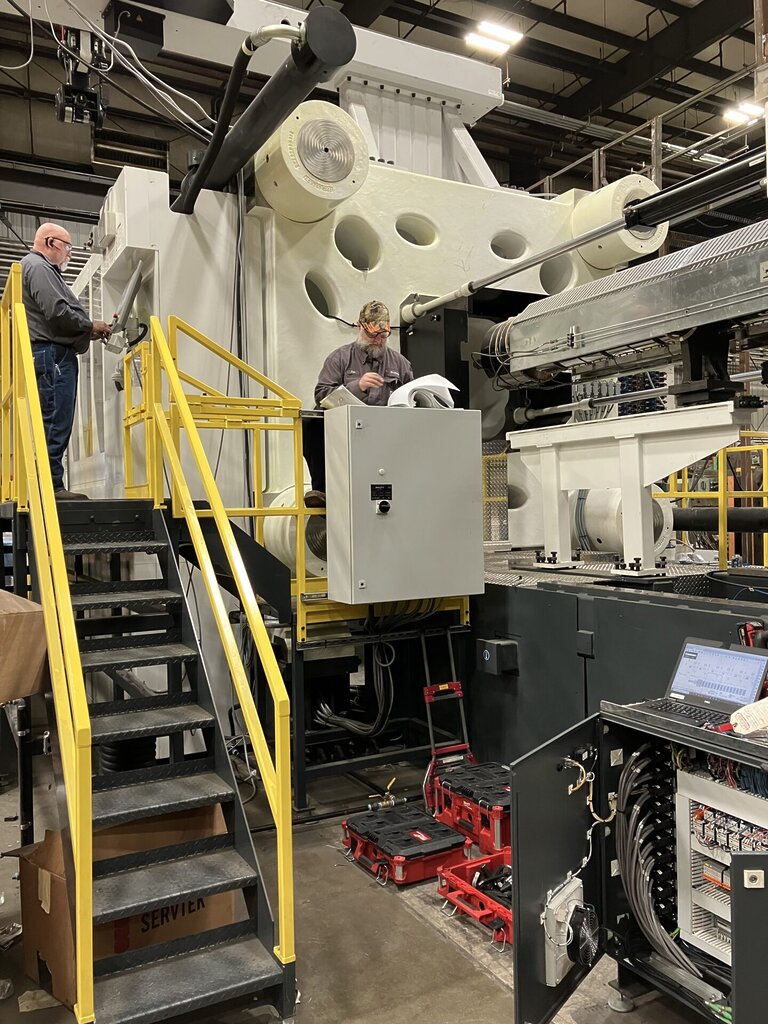
Extending machine life requires more than periodic servicing — it requires a system of consistent practices working together.
Operator Training: Operators are the daily custodians of machine health. Proper training ensures operators:
High-Quality Raw Materials: Material quality shapes both product outcomes and machine wear. Proper storage, handling, and preparation protocols protect both the part and the machine.
Regular Calibration and Alignment: Normal operation introduces gradual deviations in alignment and calibration. If left unchecked, these variations erode part quality over time. Routine calibration checks keep the machine operating within its designed specifications.
Cleaning and Inspection: Dirt, dust, and resin buildup gradually affect performance if ignored. Priority inspection areas include:
A clean machine is easier to diagnose, which shortens the time between detection and correction.
Proper Grease Flow and Lubrication: Both insufficient and excessive lubrication pose risks – too little accelerates friction-driven wear; too much attracts contaminants and complicates maintenance. Manufacturer-recommended lubrication schedules, consistently followed and verified, strike the right balance.
Hydraulic System Care: For maintaining hydraulic systems, core practices include:
Performance Tracking and Predictive Maintenance: Performance data — cycle consistency, pressure trends, downtime frequency, maintenance history — can reveal equipment health issues long before they become visible on the floor. Predictive maintenance turns machine data into a decision-support tool, moving processors from reacting to failures to anticipating them.
Age tells only part of the story. Long-term performance is shaped by the combination of maintenance discipline, operating conditions, machine monitoring, and day-to-day operational rigor — all of which are within a processor’s control.
By prioritizing preventive maintenance, monitoring the parameters that matter, investing in operator capability, and shifting toward condition-based and predictive practices, processors can extend machine life while strengthening production stability and protecting the value of their capital investment.
The path forward is a structured preventive maintenance program — one that combines routine inspection, continuous performance tracking, and clearly defined service intervals. When maintenance becomes a planned strategy rather than a reactive response, machine longevity stops being a maintenance metric and becomes a business outcome.
FAQs
How often should an injection molding machine be serviced? Service intervals vary based on machine design, operating hours, production demands, and manufacturer recommendations. Many manufacturers and processors rely on Annual Maintenance Contracts (AMCs) to ensure critical maintenance activities are completed on schedule. Under an AMC, trained service technicians perform periodic inspections of hydraulic, lubrication, electrical, and mechanical systems, identify wear before it leads to unexpected failures, and recommend corrective actions. Scheduled maintenance helps minimize unplanned downtime, maintain process consistency, improve machine reliability, and extend the injection molding machine’s overall lifespan.
What common mistakes lead to premature machine wear? The most frequent contributors are inconsistent operator practices, deferred or skipped preventive maintenance, poor housekeeping and environmental controls, and a reliance on machine age rather than condition data to guide service decisions.
Is predictive maintenance worth the investment? For operations running multiple machines across extended shifts, the case is increasingly strong. Predictive maintenance reduces unplanned downtime and catches developing issues before they require costly emergency repairs or unplanned production loss — often offsetting the cost of monitoring technology within the first cycle of avoided failures.
Key Takeaways
Blog
November 20, 2019
CINCINNATI – November 20, 2019 – Milacron Holdings Corp. (NYSE: MCRN) announced today that its stockholders voted to adopt…
Blog
January 14, 2021
Milacron launching a new rental option through our exclusive financing partner, Equipment Finance Group (EFG). Milacron, a…
Blog
November 2, 2020
Cincinnati, OH – November 2, 2020 – Milacron, a leading industrial technology company serving the plastics processing…