

Milacron
D-LFT Structural Foam Molding Systems
Produce lightweight, durable structural components with Milacron’s integrated D-LFT and low-pressure structural foam molding technology.
Low-Pressure Injection Molding + Direct Long-Fiber Thermoplastics
One machine turns raw resin and glass roving into finished structural parts
Milacron’s D-LFT structural foam systems compound long-glass-fiber thermoplastic resin in-line and injection mold it in the same cycle. A low-pressure, short-shot process forms a foamed core under a solid skin, producing large, thick-walled parts that are dramatically lighter than solid plastic, steel, or concrete, without sink marks, warp, or fiber-length loss.
No pre-compounded pellets. No second melt history. No separate compounding line. Raw materials in, finished structural parts out.
How It Works
The D-LFT structural foam molding process, step by step
Five stages, one machine, one melt history. Select a step to see what happens and why it matters.
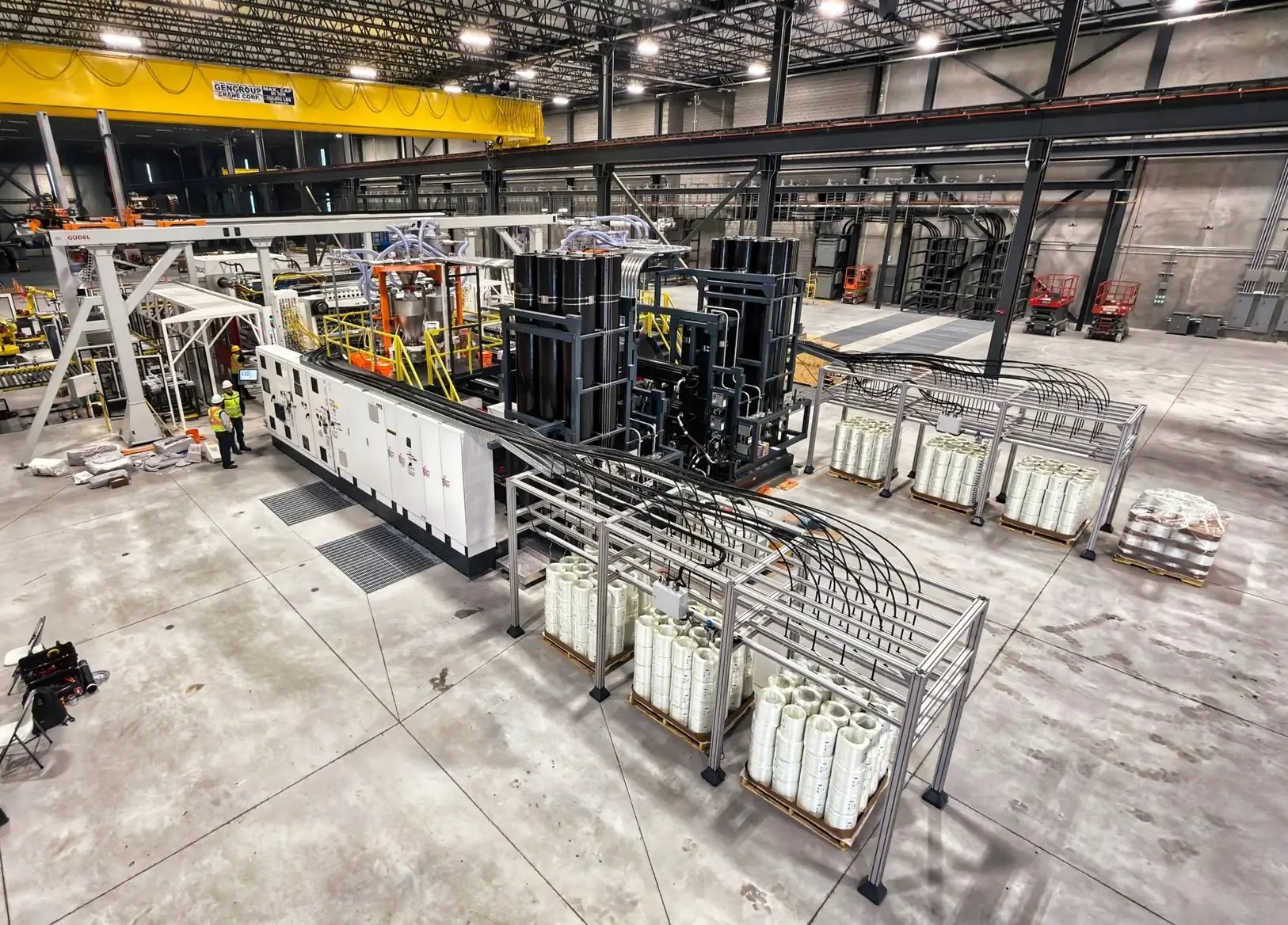
Raw materials in: thermoplastic resin and continuous glass rovings
Thermoplastic resin, additives, and continuous glass fiber rovings feed directly into the system. There are no pre-compounded LFT pellets to purchase, ship, store, or dry. Material cost drops and supply chain risk drops with it.
Why it matters: Buying resin and glass separately typically costs meaningfully less per pound than pre-compounded long-fiber pellets.
In-line compounding on a co-rotating twin screw
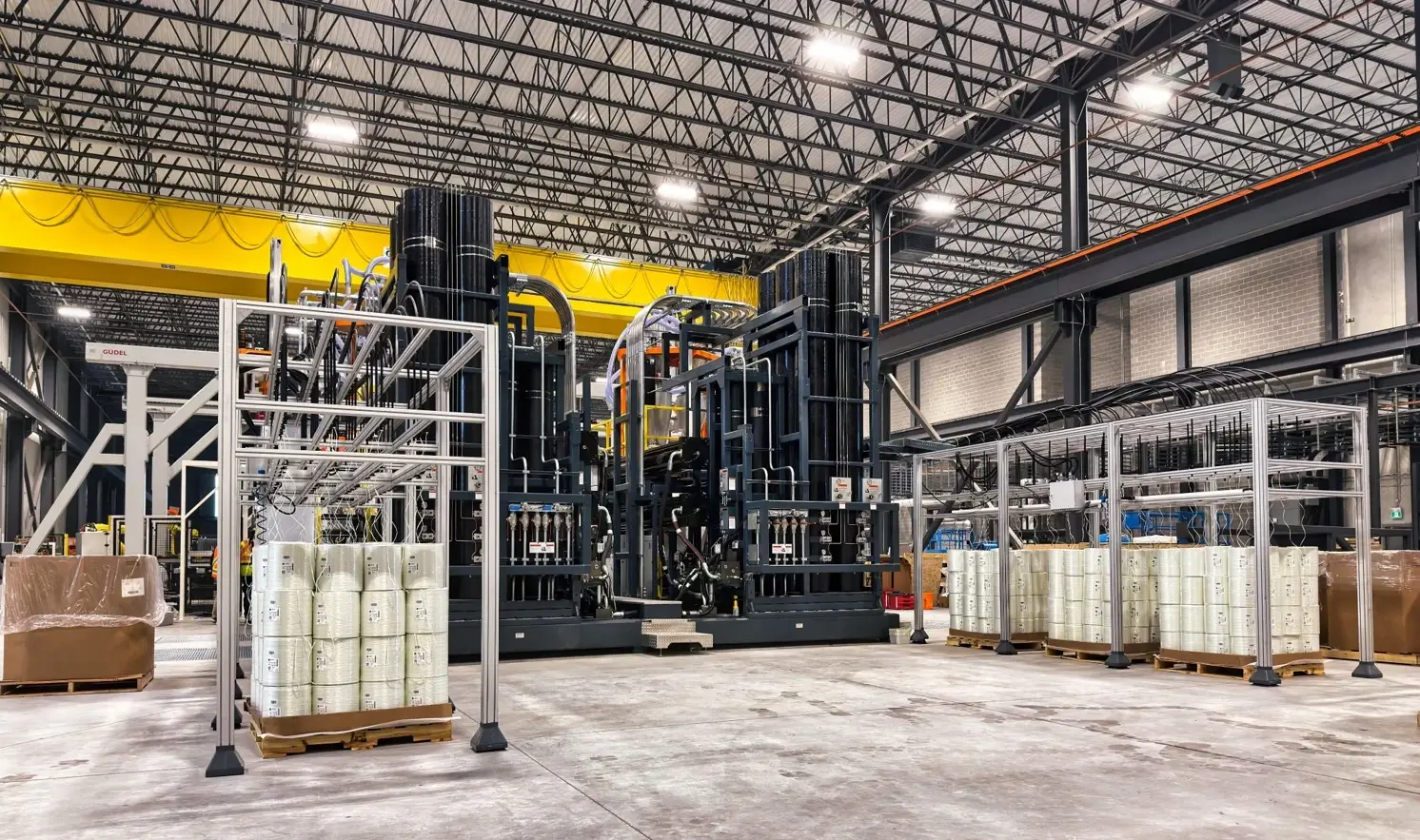
A co-rotating twin-screw compounder wets out the glass in the melt and gently works the fibers to preserve their length. This is true direct compounding. The plastic resin sees one melt history instead of being chopped, pelletized, cooled, and re-melted.
Why it matters: Longer retained fiber length is the single biggest driver of stiffness and impact strength in the finished part.
A metered blowing agent is introduced into the melt
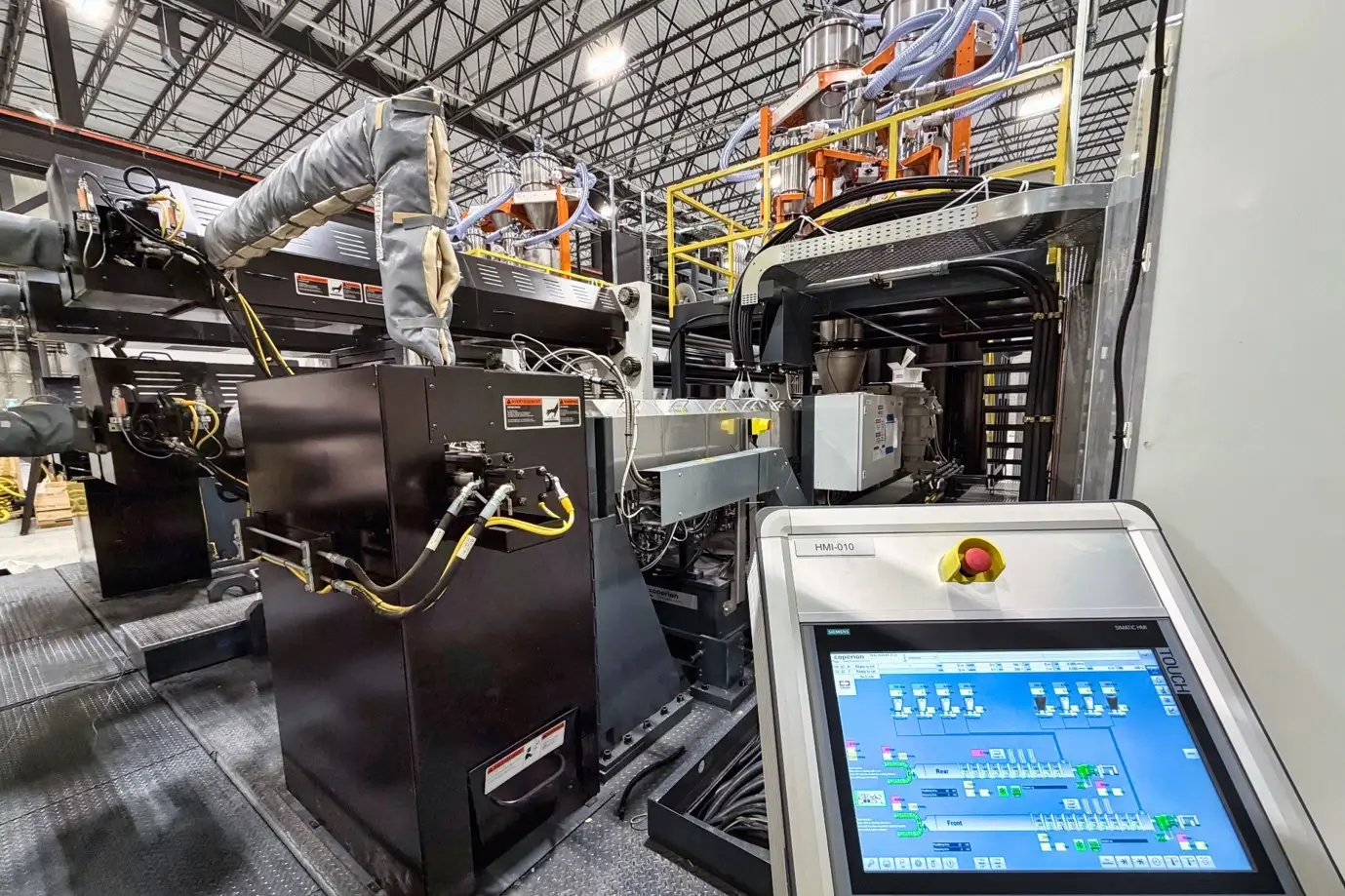
A precisely metered blowing agent is added to the fiber-filled melt. During fill, the agent expands the material from within, packing out thick sections that would sink, warp, or trap stress in a conventional solid shot.
Why it matters: Foaming is what lets you design thick, rigid wall sections without the weight or cosmetic defects of solid fill.
Multi-Nozzle, Low Pressure, Short Shot Injection
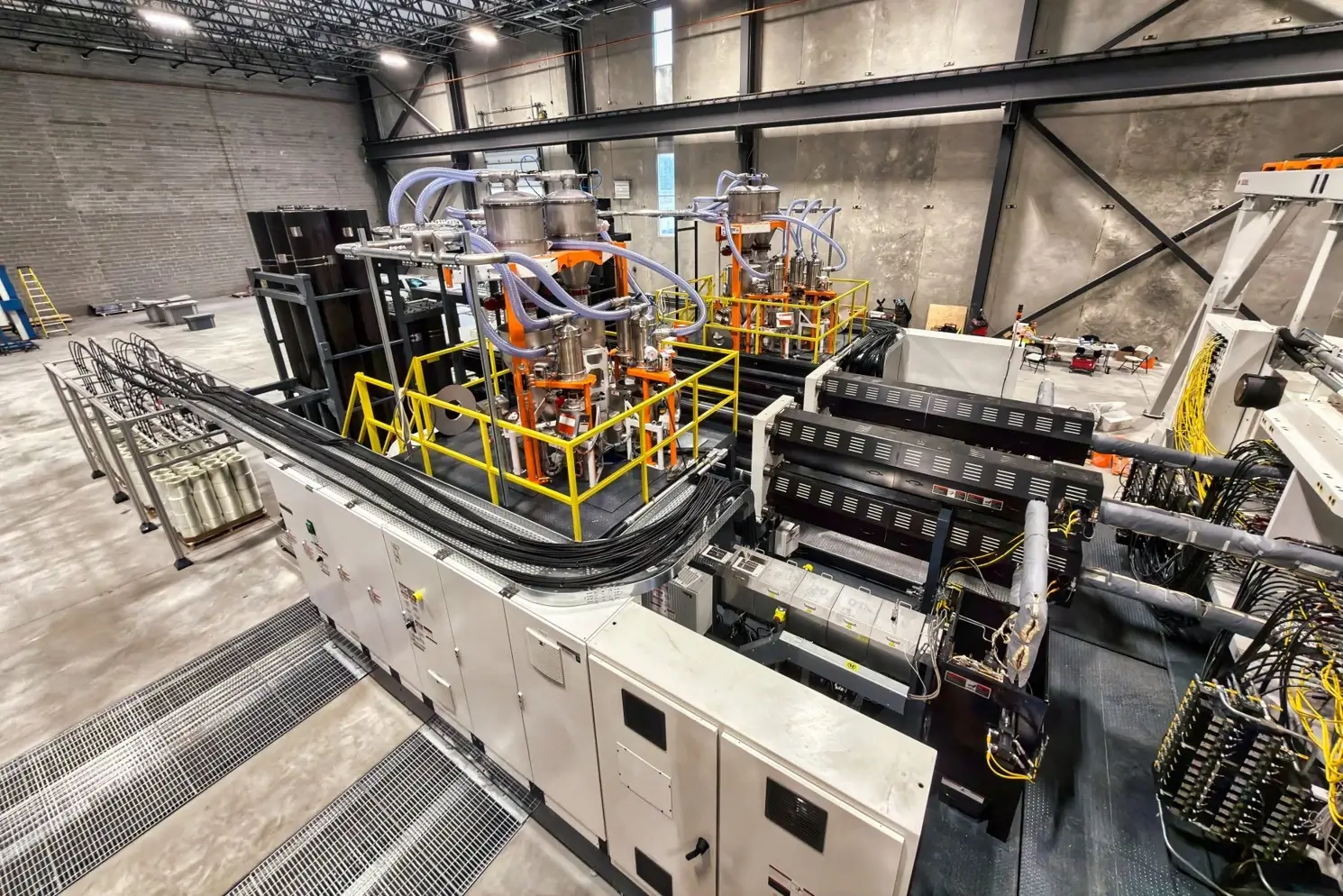
The mold is intentionally short-shot, filled with less material than the cavity volume, and the expanding foam completes the fill. Cavity pressures stay a fraction of a conventional injection shot, so the same part runs on far less clamp tonnage, and lower-cost aluminum tooling becomes viable.
Why it matters: Lower pressure means lower clamp tonnage, lower energy per part, less molded-in stress, and virtually no warp on large parts.
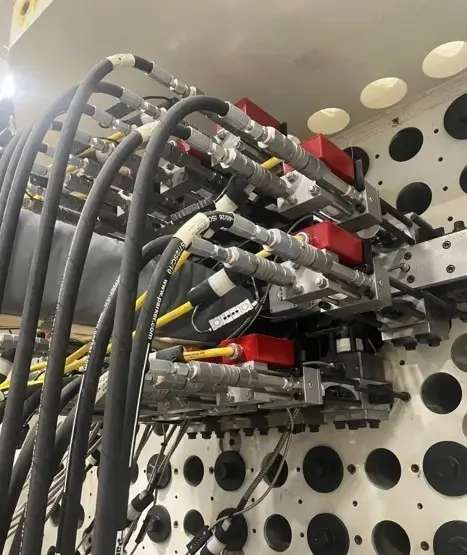
Out comes a foamed-core, solid-skin structural part
The material touching the mold surface freezes into a dense, solid skin while the interior forms a uniform cellular core. The result is an integrally rigid sandwich structure with an exceptional strength-to-weight ratio, ready for demold and downstream assembly.
Why it matters: You get the section thickness and rigidity of a heavy part at a fraction of the weight and material cost.
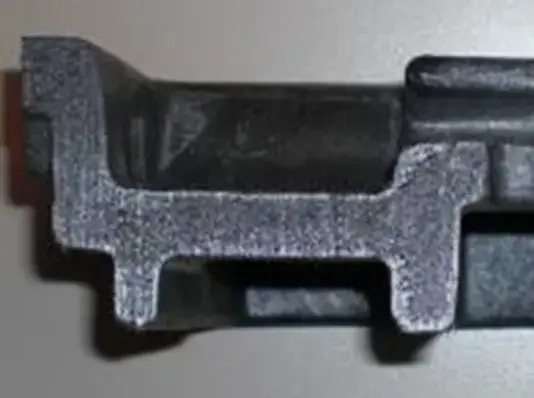
True D-LFT, Not LFT Pellets
Why in-line compounding beats pre-compounded pellets
Both routes put long glass fiber in the part. Only one preserves the fiber length you paid for.
Milacron D-LFTIn-line compounding
- Continuous rovings and resin compounded in the same cycle as molding
- One melt history preserves fiber length and mechanical properties
- Lower material cost: buy resin and glass, not compounded pellets
- Glass content and formulation adjustable at the machine
- No pellet inventory, drying, or second heating step
Pellet LFTPre-compounded
- Fiber chopped to pellet length before it ever reaches your press
- Second melt and screw pass break fibers further, degrading properties
- Per-pound premium for compounding built into every part you mold
- Locked into the pellet formulation you purchased
- Pellet logistics: purchasing, shipping, storage, drying
The Platform
Built on the Milacron L-Series, the benchmark in low-pressure injection molding
For over fifty years, Milacron LPIM machines have molded the industry’s largest structural parts. The current generation pairs a heavy-duty clamp design with modern servo drives and controls.
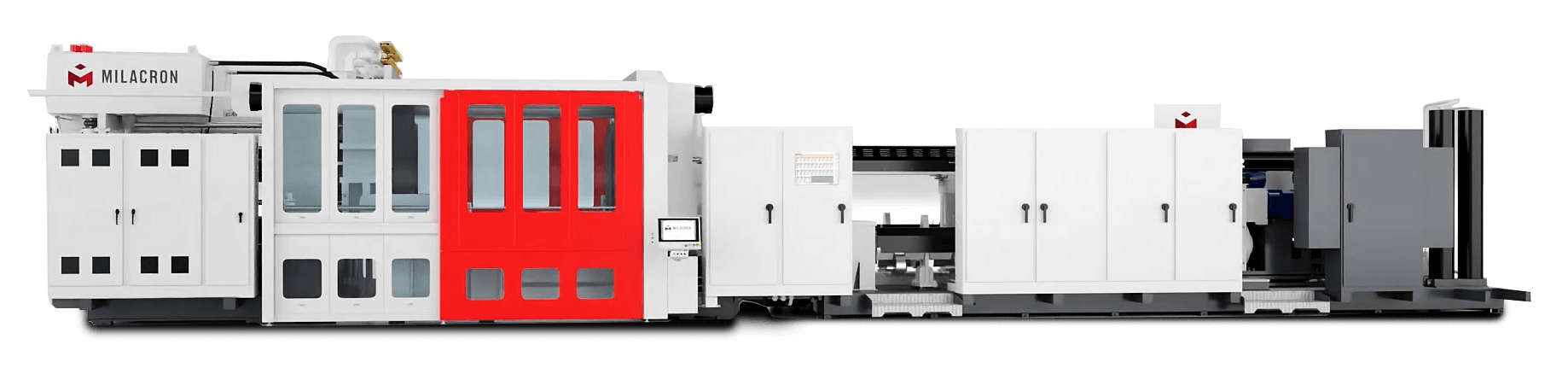
One press, multiple technologies
Structural foam, structural web gas assist, and solid part molding on the same machine. Change the process, not the equipment.
Multi-nozzle sequencing
Modular multi-nozzle systems with nozzle sequencing mold single ultra-large parts, or families of parts, in one shot. Run multiple resins or colors within the same cycle.
Massive work envelope
Heavy-duty modular clamp design with large-format platens and shot sizes exceeding 400 lb. If the part is big and thick, this is the machine it was meant for.
Lower tooling cost
Low cavity pressures allow simpler, lower-cost aluminum molds, and a rugged clamp protects those mold assets over long production life.
Modern drives and controls
FANUC servo drive package and state-of-the-art controls improve energy efficiency, simplify operation, and support data collection, self-diagnostics, and automation integration.
Lifetime support
Milacron builds, rebuilds, and upgrades LPIM machines, backed by North American service, parts, and remote diagnostics through M-Powered.
Application Spotlight
Underground utility vaults and enclosures: one platform, both halves
Concrete’s grip on underground infrastructure is slipping. Precast and polymer concrete vaults are heavy to ship, slow to produce, and brittle in the ground, and every one of those costs lands on the manufacturer. A single D-LFT press and family tool set produces the vault body and its matching lid, cutting capital equipment and floor space versus separate lines. And the molded parts are winning the spec against concrete on weight, durability, and installed cost.
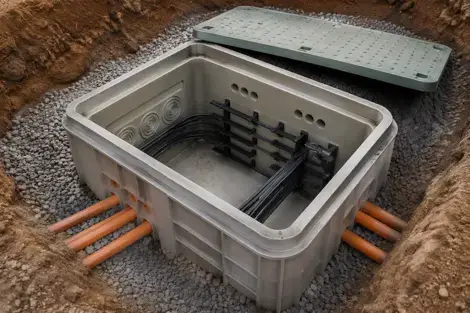
Why molded structural foam is replacing concrete underground
- Up to 60% lighter than concrete. One installer can set most sizes by hand. No crane, no confined-space rigging, no second crew standing by.
- No rust, no spall, no cracking. Structural foam shrugs off freeze-thaw cycles, high water tables, and corrosive soils that destroy concrete and steel enclosures.
- Nestable by design. Solid concrete vaults ship one per pallet. Molded vaults nest inside each other, so more product moves per truck and freight cost per unit drops sharply.
- 40+ year design life. UV-stabilized, chemical-resistant long-glass-fiber thermoplastic holds up for decades in the ground.
- Faster installs, fewer callbacks. Molded knockouts, pre-cored duct entries, and factory-fit racking options come out of the tool, not out of field labor.
For the manufacturer, every one of those selling points is molded in on a single Milacron machine. That is the business case: a lighter, longer-lasting product line with lower material cost per part and one press to run it. And for enclosure producers currently buying vaults from concrete suppliers, D-LFT is the path to making them in-house, with full control of the product, the supply chain, and the margin.
Cycles measured in minutes, not hours
Concrete cures. D-LFT cycles. Where precast and polymer concrete output is gated by cure time, a D-LFT structural foam press demolds a finished vault in minutes and immediately starts the next shot. That throughput difference, multiplied across a production year, rewrites the economics of the product line.
The same process scales across industries
Questions, Answered
Low-pressure injection molding and D-LFT FAQ
What is low-pressure injection molding (LPIM)?
Low-pressure injection molding is a process for molding large, thick-walled plastic parts at cavity pressures far below conventional injection molding. A metered shot, often combined with a blowing agent, fills the mold at low pressure, which minimizes molded-in stress, virtually eliminates warp, reduces required clamp tonnage, and allows lower-cost aluminum tooling. Milacron has led multi-nozzle LPIM technology for more than fifty years.
What is D-LFT and how is it different from LFT pellets?
Direct long-fiber thermoplastic (D-LFT) compounds continuous glass fiber rovings and resin in-line, immediately before molding, in a single melt history. Pellet LFT is pre-compounded elsewhere, chopped to pellet length, then re-melted at the press, which breaks fibers and degrades mechanical properties. D-LFT preserves fiber length, lowers material cost per pound, and lets you adjust glass content at the machine.
What is structural foam molding?
Structural foam molding is a low-pressure, short-shot injection process in which a blowing agent expands the melt inside the mold. The material against the mold wall freezes into a solid skin while the interior forms a cellular foamed core. The result is a rigid sandwich structure with a high strength-to-weight ratio, thick wall sections without sink marks, and significantly less material per part.
How much lighter are D-LFT structural foam parts than steel or concrete?
Long-glass-fiber thermoplastic structural foam parts run dramatically lighter than the materials they replace: typically 30% to 40% lighter than comparable steel fabrications and up to 60% lighter than precast concrete. In applications like underground utility vaults, that weight reduction eliminates cranes and rigging from installation.
Can one machine really produce both the vault body and the lid?
Yes. A single Milacron press with a family tool set molds the vault body and its matching lid, and modular multi-nozzle systems support multiple molds in a single cycle. Modular platens let you add tooling for new vault and lid sizes on the same base machine as your product line grows.
Why does low-pressure molding reduce clamp tonnage and tooling cost?
Because the mold is short-shot and the foam completes the fill, cavity pressure stays a fraction of a solid injection shot. Lower cavity pressure means lower clamp tonnage does the same work, so energy cost per part drops and molds can be cut from lower-cost aluminum rather than hardened steel.
How does D-LFT structural foam compare with precast or polymer concrete production?
Concrete production is gated by cure time, with cycles measured in hours, while a D-LFT structural foam press demolds a finished part in minutes. The molded parts are up to 60% lighter, resist the cracking and freeze-thaw failure that plague concrete, and nest for shipping where solid concrete vaults move one per pallet. For manufacturers, that means higher throughput, lower freight cost per unit, and a product that installs without cranes or rigging.
How do I evaluate D-LFT structural foam for my part?
Start a conversation with our application engineering team. Bring your part geometry, current material, and volumes. We’ll assess fit for the process, estimate press size and tooling approach, and set up a visit to our Batavia, Ohio facility so you can see the technology and talk through your application with our engineers.
See the Process for Yourself
Tell us about your application: the part, the current material, and your volumes. Our application engineers will assess fit for D-LFT structural foam, recommend a press and tooling approach, and set up a visit to our Batavia, Ohio facility so you can watch the process run in person. Use the form below to start the conversation.
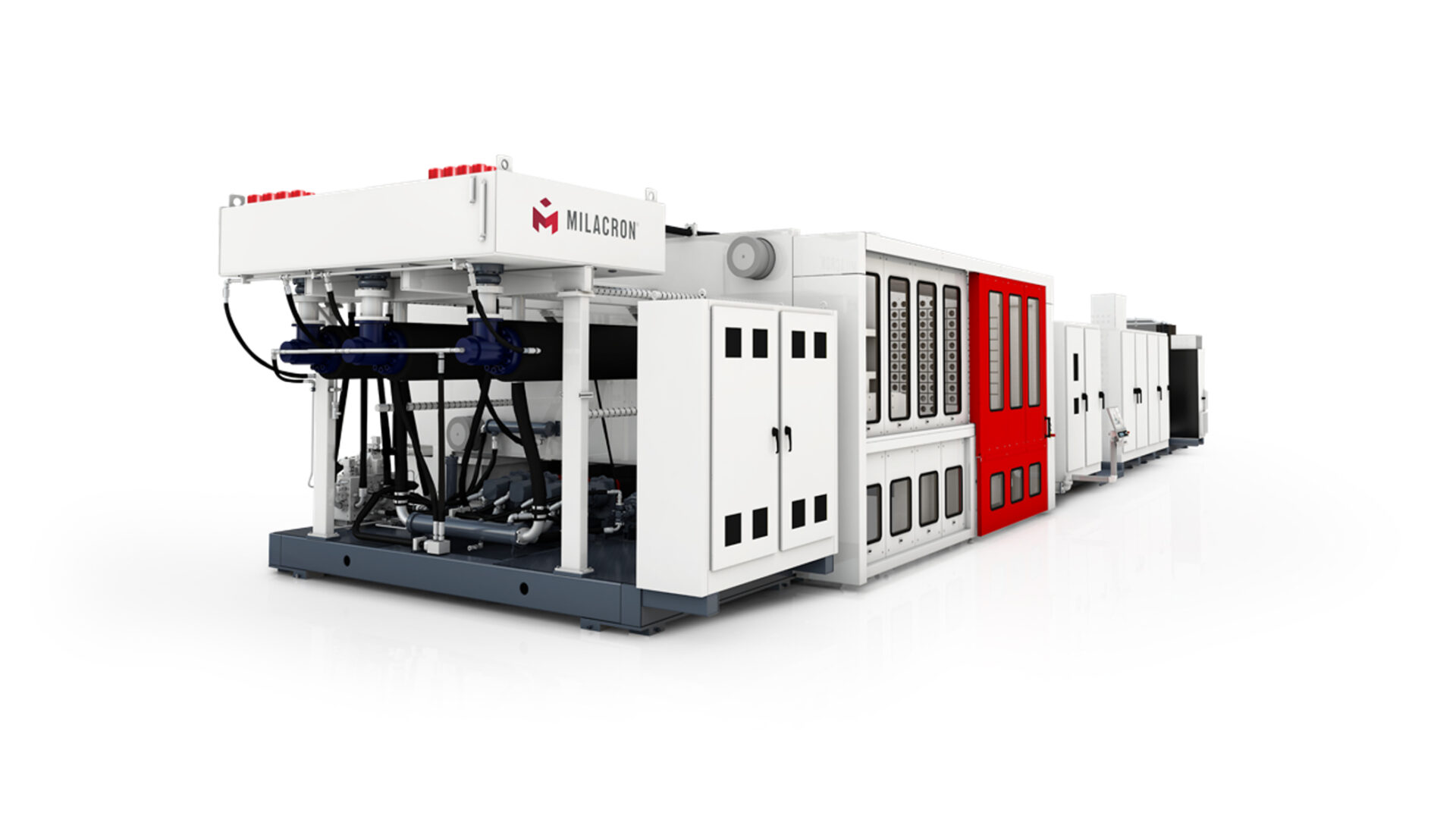
The L-Series for D-LFT Production
The L-Series utilizes Milacron’s proprietary Structural Web Technology. No gas is introduced during the resin melting phase but rather introduced through gas nozzles at specific injection locations in the mold. This process achieves part shape by producing hollow channels and hollowing out thick sections resulting in a high aesthetic sink-free finish with good color, uniformity, and cosmetic appearance.
Your Partner In Plastic Processing
Milacron transforms plastics into possibilities.
Contact us today to learn more about our complete plastic processing solutions.